


Casino Blackjack Basic Strategy Chart Usage

Casula Blackjack Basic Strategy Chart Use
Mastering basic strategy is the single most effective way to improve your odds at the blackjack table. This guide provides a step-by-step walkthrough on how to understand and use a blackjack basic strategy chart specifically for games offered at casula.si. We’ll move beyond theory and focus on practical application, ensuring you know exactly what to do with your cards in any situation.
Understanding the Blackjack Basic Strategy Chart
A basic strategy chart is not a guarantee to win every hand; it is a mathematically optimized guide that tells you the statistically best decision (Hit, Stand, Double Down, Split) for every possible combination of your hand and the dealer’s upcard. Developed through computer simulations that played millions of hands, it minimizes the house edge. For most standard blackjack games, using basic strategy can reduce the house advantage to as low as 0.5%. This is the lowest edge you will find in any Casula casino game outside of pure skill-based contests.
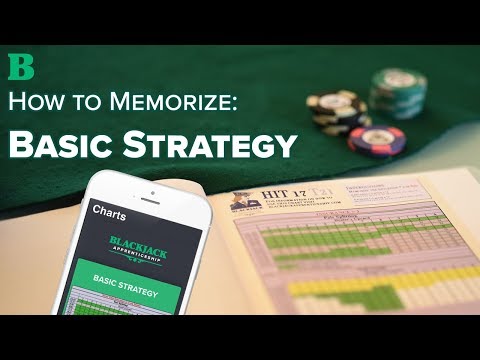
How to Read the Chart: A Step-by-Step Guide
Reading the chart is straightforward once you understand its layout. Follow these steps for any hand:
- Locate Your Hand: Find your total point value (e.g., 16) or your pair (e.g., 8-8) on the leftmost vertical column.
- Find the Dealer’s Card: Find the value of the dealer’s face-up card (e.g., 10) on the top horizontal row.
- Find the Intersection: Trace your finger from your hand to the column under the dealer’s card. The action in that cell (H, S, D, P) is your optimal move.
For example, if you have a hand totaling 16 and the dealer shows a 10, the chart will almost always instruct you to Hit, even though it feels risky.
Key Strategy Decisions and When to Make Them
The chart’s recommendations are based on probability. Here’s a breakdown of the logic behind the most common directives:
- Hit or Stand: You stand on hard 17 and above because the risk of busting is high. You hit on 11 or lower because you cannot bust. The tough decisions (12-16) depend entirely on the dealer’s weak (2-6) or strong (7-Ace) upcard.
- Double Down: This is recommended on strong starting hands like 10 or 11, especially when the dealer shows a weak card (2-6). It maximizes your bet when the odds are most in your favor.
- Splitting Pairs: Always split Aces and 8s. Never split 10s, 5s, or 4s. Splitting turns one bad hand (e.g., two 8s for 16) into two potentially strong hands.
Important Rule Variations and Chart Adjustments
Not all blackjack games are created equal. The specific rules of the table will slightly alter the perfect strategy. Before you play at Casula, always check these rule details, as they impact which chart you should use. The most common variations are whether the dealer Hits or Stands on Soft 17 and the number of decks in play. A game where the dealer stands on soft 17 is more favorable to the player. The standard chart provided here assumes the most common rules found at casula online.
| Your Hand | Dealer Shows 2-6 | Dealer Shows 7-Ace |
|---|---|---|
| Hard 16 | Stand | Hit |
| Hard 11 | Double Down | Hit |
| A-7 (Soft 18) | Stand | Hit |
| Pair of 8s | Split | Split |
| Pair of 10s | Stand | Stand |
Practicing and Applying Basic Strategy at Casula
Memorizing the chart is only the first step. You must practice until the decisions become automatic. Use free-to-play blackjack games to drill the strategy without financial risk. When you’re ready to play for real, start at low-stakes tables to build confidence. Remember, the goal is long-term statistical improvement, not winning every single hand. Utilizing a Casula bonus or Casula no deposit offer is a fantastic way to practice with real funds on the line. Simply look for the latest Casula promo code to claim your bonus, which could include match funds or even Casula free spins for other games, giving you more bankroll to practice your blackjack skills.
Common Mistakes and Troubleshooting
Even experienced players make emotional decisions that deviate from basic strategy. The most common error is standing on a weak hand (like 12 against a dealer’s 2 or 3) because « the dealer will probably bust. » The chart says to hit because statistically, it’s the better play. Trust the math. Another mistake is not doubling down or splitting when the chart advises it, leaving potential profit on the table. If you find yourself consistently losing, review the chart to ensure you are not misapplying a rule for the specific game you are playing.